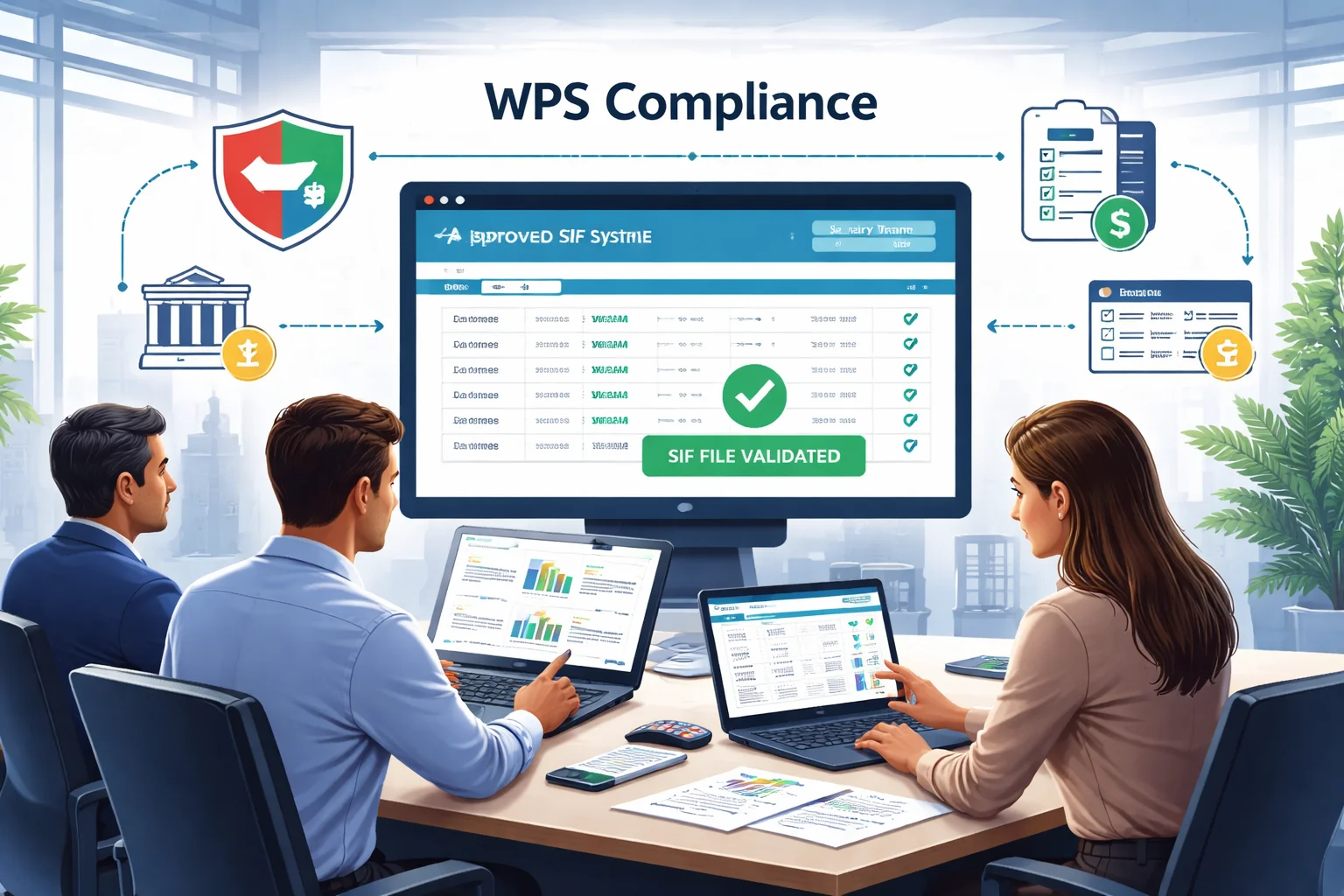
In my experience working with HR and payroll teams across the UAE, I have seen one common challenge. Many organizations understand that WPS compliance is important, but they struggle with execution. The rules seem clear on paper, yet small errors in payroll files can lead to serious consequences.
The Wage Protection System, often called WPS, is not just a process. It is a regulatory framework designed to protect employees and ensure that salaries are paid accurately and on time. For employers, it is also a system that demands discipline, accuracy, and consistency.
This guide will help you understand WPS in a practical way. I will focus on real challenges, common mistakes, and how you can build a compliant payroll process without confusion.
What is WPS and Why It Matters
WPS is an electronic salary transfer system introduced by the Ministry of Human Resources and Emiratisation. It requires companies to pay employees through approved banks or financial institutions.
The purpose is simple. The government wants a clear and trackable record of salary payments. This ensures that employees are not underpaid or delayed.
For companies, WPS compliance is not optional. It directly affects your ability to operate smoothly in the UAE.
If your payroll is not compliant, the impact can be immediate. Companies may face restrictions on new work permits, financial penalties, and increased scrutiny during inspections.
The Real Risks of Non Compliance
Many companies underestimate the risk until they face it. One of the most serious consequences is a block on new visas. If more than 20 percent of your workforce is not paid through WPS, the system can automatically flag your company. This can stop your hiring plans instantly.
Another risk is financial penalties. A delay in salary payments can lead to fines of AED 1,000 per employee per month. For larger teams, this can quickly become a significant cost. There is also a reputational risk. Employees today are more aware of their rights. Delays or errors in salary payments can damage trust and increase attrition.
Understanding the SIF File
At the core of WPS compliance is the Salary Information File, or SIF. This is the file that companies upload to process salary payments.
Think of the SIF file as a structured report. It contains details such as employee information, salary components, number of working days, and bank details.
Even a small mistake in this file can cause rejection or compliance issues. From my experience, most payroll errors are not complex. They are simple mistakes that go unnoticed until submission.
Common Mistakes in WPS Payroll
Let me highlight some of the most frequent errors I see during audits.
The first is a mismatch between the total salary in the header and the sum of employee records. This is a basic calculation issue, yet it is one of the most common reasons for rejection.
The second is incorrect reporting of days worked. This usually happens when employees take unpaid leave. If the number of days is not adjusted correctly, the salary calculation becomes inaccurate.
The third is incorrect routing codes. Banking details must follow a strict format. Even a small formatting error can cause payment failure.
Another common issue is missing employee identifiers. Every employee must have a valid ID in the system. Missing data leads to incomplete records.
These errors are avoidable. But they require a structured process and proper validation before submission.
Handling Complex Payroll Scenarios
Not all payroll situations are straightforward.
For example, how do you handle unpaid leave? The number of working days must be adjusted, and the salary must reflect the actual days worked. If this is not done correctly, the system may flag the payment.
Another scenario is negative salary. This can happen due to deductions or advances. Many payroll teams are unsure how to represent this in the SIF file. Incorrect handling can lead to rejection.
There are also cases where employees join or leave mid month. This requires careful calculation of prorated salary and accurate reporting in the file. These scenarios require both technical knowledge and practical judgment. It is not enough to follow a formula. You must understand how the system interprets the data.
Building a Compliant Payroll Process
WPS compliance is not achieved by fixing errors after they occur. It requires a proactive approach.
The first step is standardization. Your payroll process should follow a consistent structure every month. This reduces the chances of variation and errors.
The second step is validation. Before submitting the SIF file, it must go through a detailed check. This includes verifying totals, employee data, and formatting.
The third step is documentation. Every payroll action should be recorded. This helps during audits and ensures transparency.
The fourth step is automation. Manual processes increase the risk of human error. Automating calculations and validations can significantly improve accuracy.
The Role of HR in WPS Compliance
Many people think WPS is only a payroll responsibility. That is not true. HR plays a critical role in ensuring compliance. Accurate employee data starts with HR. If the employee records are incomplete or incorrect, the payroll output will also be incorrect. HR is also responsible for managing leave records, contract details, and employee status changes. All of these directly impact payroll calculations. In my experience, the best results come when HR and payroll teams work closely together. Compliance is a shared responsibility.
Preparing for Audits and Inspections
Audits are a reality for companies operating in the UAE. The key to handling audits is preparation. Your records should be organized and easily accessible. This includes payroll reports, SIF files, and employee data.
You should also have a clear audit trail. This means you can track every change made to payroll data. If your process is digital and well documented, audits become much easier. If your process is manual, audits can become stressful and time consuming.
Moving from Reactive to Proactive Compliance
Many companies take a reactive approach. They fix issues only after they are flagged.
This approach is risky. A proactive approach focuses on prevention. It ensures that errors are identified and corrected before submission. This requires the right tools, processes, and mindset. Compliance should not be seen as a burden. It should be seen as a system that protects both the company and its employees.
WPS compliance is not just about avoiding fines. It is about building a reliable and transparent payroll system. When done correctly, it improves employee trust, reduces risk, and strengthens your organization.
In today’s environment, manual processes are no longer enough. Companies need smarter ways to manage compliance with accuracy and speed. If you are looking for a structured and practical way to handle WPS, you can explore the tools and resources available on the WPS Compliance Hub by Kiework, which brings together validation, automation, and guidance in one place.
