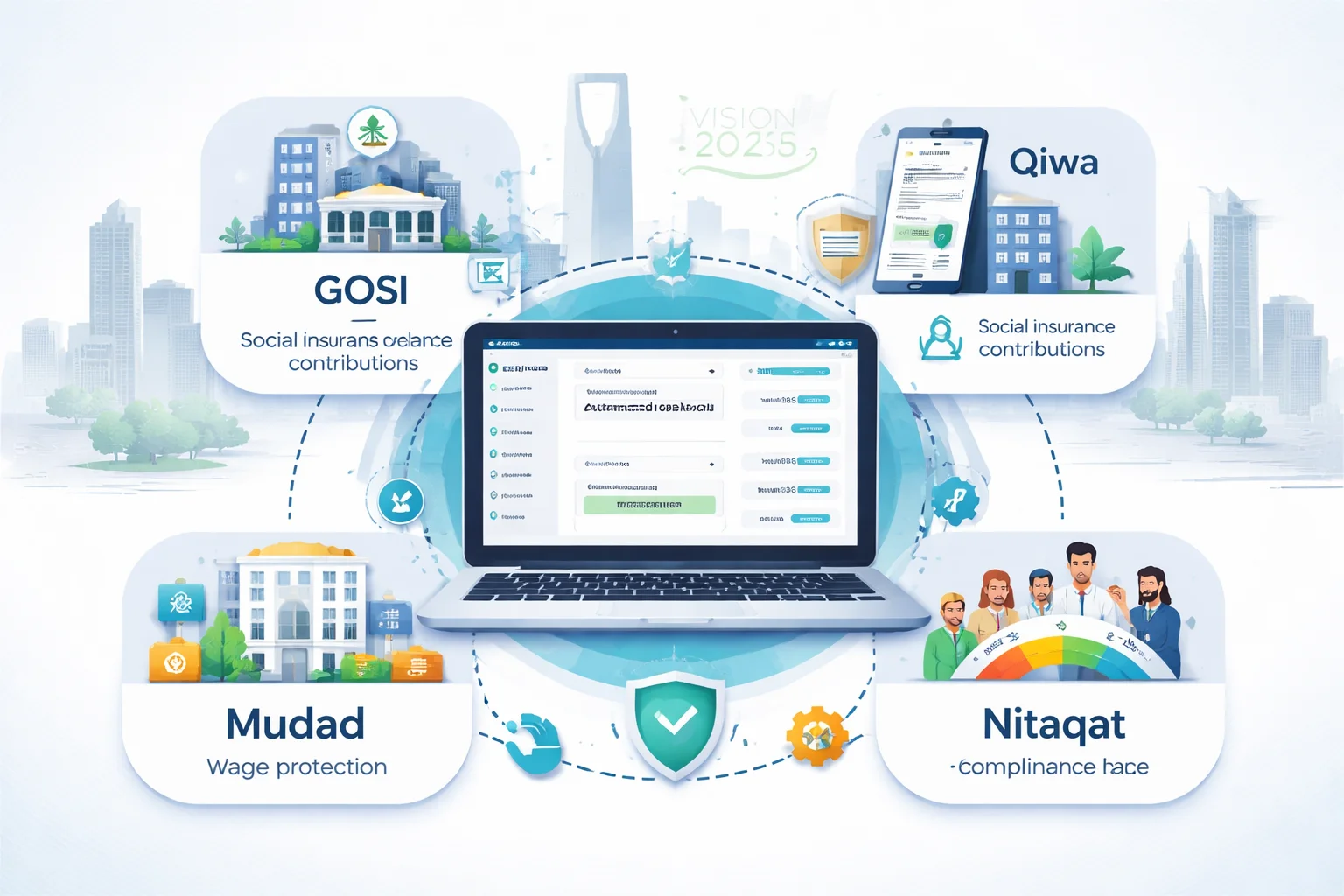
Saudi Arabia is rapidly transforming its labor ecosystem through digital platforms, regulatory reforms, and workforce nationalization initiatives. For businesses operating in the Kingdom, this evolution brings both opportunity and complexity. Managing payroll, compliance, and employee lifecycle processes now requires a deeper alignment with systems such as General Organization for Social Insurance, Mudad, and Qiwa.
From a systems and process validation viewpoint, success in this environment depends on being correct, consistent, and able to manage real-world situations without failure. This guide looks at how modern HR software helps businesses in Saudi Arabia manage compliance, lower operational risk, and create dependable payroll workflows.
Understanding the New Reality of Saudi HR Operations
Saudi Arabia’s labor market is no longer driven by manual processes or isolated systems. With initiatives aligned to Vision 2030, organizations are expected to operate within a fully digital compliance framework.
Key pillars of this ecosystem include:
GOSI for social insurance contributions
Mudad for wage protection and payroll reporting
Qiwa for digital contracts and labor relationship management
Nitaqat for tracking Saudization levels
Each system introduces its own rules, data structures, and validation requirements. The challenge is not just understanding these systems individually, but ensuring they work together seamlessly within your HR and payroll processes.
Why Compliance Is More Complex Than It Appears
On the surface, compliance may seem like a checklist. Submit payroll, calculate contributions, maintain employee records. In reality, every step involves layered validations and dependencies.
For example:
A payroll run must align with GOSI contribution rules
Salary files submitted to Mudad must follow strict formatting and totals
Employee contracts in Qiwa must match payroll and employment records
Saudization levels must remain within acceptable thresholds under Nitaqat
A mismatch between any of these components will result in compliance problems, delays, and audits. From an operational reliability perspective, this complexity adds risk to the process. Without proper validation, problems may go unnoticed until they affect operations.
The Critical Role of Payroll Accuracy in Saudi Arabia
Payroll is at the center of compliance in the Kingdom. It connects directly to multiple regulatory systems, making accuracy non negotiable.
GOSI Contributions
Employers must calculate contributions based on employee nationality and salary structure. For Saudi nationals, contributions can reach up to 22 percent, while non Saudi employees require occupational hazard coverage. Even a small miscalculation can lead to discrepancies in filings and potential audit risks.
Mudad and WPS Compliance
Salary payments must be processed through the Wage Protection System using structured files. These files must match employee records, salary details, and total calculations exactly.
Common issues include:
Incorrect salary totals
Missing employee data
Formatting inconsistencies
Each of these can result in rejected submissions or delays in salary processing.
Real World Scenarios That Challenge HR Systems
In practice, HR and payroll processes are rarely static. Businesses frequently encounter scenarios that require careful handling.
Consider situations like:
Mid month employee onboarding or exits
Salary revisions or variable pay adjustments
Unpaid leave or absences
Contract changes reflected in Qiwa
Each scenario introduces edge cases that standard workflows may not handle correctly.
For example, a worker exiting midway through the period needs proper pro-rated salary calculations, GOSI contribution adjustments, and contract data coordination. Failure to validate any of these may lead to inaccuracies in the system.
How Modern HR Software Improves Reliability
To manage this level of complexity, businesses are increasingly adopting localized HR software designed specifically for Saudi compliance requirements.
These systems are built with validation and automation at their core.
Automated Payroll Calculations
Instead of relying on manual calculations, software engines compute salaries, deductions, and contributions automatically. This ensures consistency and reduces the risk of human error.
Built in Compliance Logic
Regulatory rules are embedded within the system. Whether it is GOSI contribution rates or WPS formatting standards, the software applies the correct logic during processing.
Real Time Visibility
Dashboards provide instant insights into compliance status. Businesses can track Saudization levels, payroll completion, and pending actions without manual checks.
Pre Submission Validation
Before any data is submitted to external systems, it is validated internally. This helps identify errors early and prevents costly rework.
The Importance of Nitaqat Monitoring
Saudization is a key component of workforce planning in Saudi Arabia. Under the Nitaqat program, companies are classified based on their employment of Saudi nationals.
Maintaining the right classification is critical because it directly affects:
Ability to hire new employees
Access to government services
Overall operational flexibility
Tracking Nitaqat manually can be difficult, especially as workforce numbers change.
A reliable system provides:
Real time tracking of Saudization percentages
Clear visibility into current classification
Insights to support hiring decisions
This allows businesses to stay within safe compliance thresholds while planning growth strategically.
Managing GOSI Without Errors
GOSI compliance is one of the most sensitive areas in Saudi payroll. It involves precise calculations, timely submissions, and alignment with employee data.
Challenges often arise from:
Incorrect salary components used in calculations
Failure to update contribution rates
Misalignment between payroll and GOSI records
Automated systems address these challenges by:
Applying correct contribution rules dynamically
Updating calculations as regulations change
Ensuring consistency across payroll and reporting
This significantly reduces audit risks and ensures smooth compliance.
Streamlining Mudad and WPS Processes
Submitting payroll through Mudad requires accurate SIF file generation and validation. Manual preparation of these files is both time consuming and error prone.
Modern HR software simplifies this by:
Generating SIF files automatically from payroll data
Validating file structure and totals before submission
Ensuring compatibility with Mudad requirements
This reduces processing time from hours to minutes while improving accuracy.
Building a Resilient HR Workflow
Reliability in HR operations comes from structured workflows and consistent validation. A well designed system ensures that every step is verified before moving forward.
An effective workflow typically includes:
Employee data validation
Payroll calculation and review
Automated compliance checks
File generation and validation
Final submission to regulatory systems
Each step acts as a checkpoint, reducing the likelihood of errors and ensuring smooth operations.
The Value of Real World Testing in HR Systems
Systems that look correct in theory may behave differently under real conditions. This is why real world scenario testing is essential.
Testing helps ensure that:
Edge cases are handled correctly
Data flows accurately across systems
Outputs meet regulatory requirements
By validating workflows against actual business scenarios, organizations can build confidence in their systems and avoid unexpected failures.
Preparing for the Future of HR in Saudi Arabia
As Saudi Arabia continues its digital transformation, HR systems will become even more integrated with government platforms.
Future developments may include:
Deeper integration with Qiwa and Mudad
Real time compliance monitoring
Automated regulatory updates
Predictive insights for workforce planning
Businesses that adopt modern, localized HR software today will be better positioned to adapt to these changes.
Operating in Saudi Arabia requires more than basic HR management. It demands a structured, accurate, and compliant approach to payroll and workforce processes. The interconnected nature of systems like GOSI, Mudad, Qiwa, and Nitaqat makes it essential to eliminate errors and ensure consistency at every step.
By adopting a system driven approach with built in validation and automation, businesses can reduce risk, improve efficiency, and maintain full compliance with evolving regulations.
Platforms like Kiework are designed to support this journey by combining localized compliance logic, automated workflows, and real time visibility, helping organizations operate confidently in the Kingdom’s dynamic labor environment.