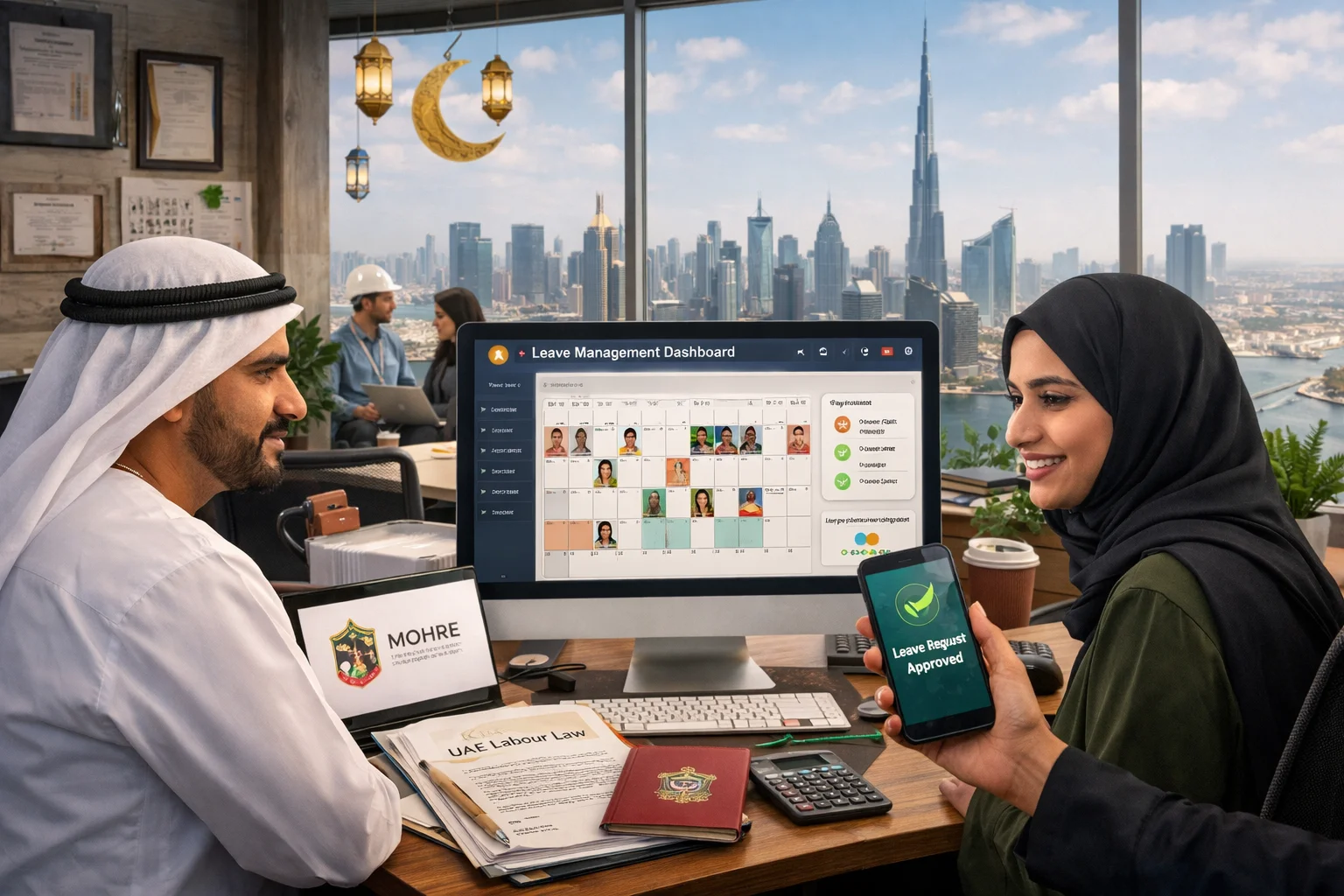
If you’ve ever tried to manage a team’s vacation schedule during the lead-up to Eid Al Fitr in Dubai or Abu Dhabi, you know that "hectic" doesn't even begin to cover it. One minute you’re approving a quick weekend getaway to Ras Al Khaimah, and the next, you’re drowning in a sea of paper forms, WhatsApp pings, and "did I have enough balance?" emails.
Managing leave in the UAE isn’t just about marking dates on a calendar. It’s a tricky balancing act between keeping the business running and following the rules set by the MOHRE (Ministry of Human Resources and Emiratisation). Whether your office overlooks the mangroves in Ajman or the industrial areas of Umm Al Quwain, the challenge is the same: how do you keep everyone happy without losing your mind?
The "Paper Trail" Trap
Let’s be honest. In 2026, relying on manual logs or a shared Excel sheet is like trying to drive through Sharjah during rush hour without GPS. You’ll eventually get there, but you’ll be exhausted and probably late.
Manual systems attract hidden costs. Time goes into manually calculating accruals, taking two days per month for new employees and 30 days for those with more experience. There are also the constant emails for approvals and the common disputes over leave days. When considering the different types of leave from standard Annual Leave to the specific 60-day Maternity Leave and the 5-day Parental Leave the calculations become complicated quickly.
Why Automation is the Real "Hidden Gem"
Imagine a world where your leave system does the heavy lifting for you. This isn't just a luxury for the big firms in Fujairah; it’s a necessity for any growth-focused business in the Emirates. Here is why automation is changing the game:
1. No More "Surprise" Shortages
With a visual team calendar, managers can see exactly who is out before they hit "Approve." You won't find yourself in a situation where the entire engineering team is trekking in the mountains while a critical project deadline looms. It provides transparency that keeps operations smooth from the skyscrapers of the city to the quietest corners of the Northern Emirates.
2. Accuracy That Protects Your Bottom Line
In the UAE, leave salary is more than just a gesture; it is a legal requirement often tied to the basic salary. An automated system integrates directly with your payroll, ensuring that loss-of-pay (LOP) days are calculated instantly. This eliminates the manual errors that lead to frustrated employees and potential labor disputes.
3. Mobile-First Culture
We live on our phones. Whether your employees are grabbing a coffee in a trendy Dubai cafe or visiting family across the border, they should be able to request leave in seconds. Automated workflows send push notifications to managers, turning a 3-day approval process into a 3-minute one.
Staying Compliant with MOHRE
The UAE labor law is dynamic. With recent updates to contract types and leave entitlements, such as the nuanced sick leave rules (15 days full pay, 30 days half pay), staying compliant is a full-time job. Leave management automation ensures your policies are always up-to-date with the latest decrees. It is like having a compliance officer who never sleeps, ensuring every carry-forward rule and encashment calculation is 100% verified.
The Human Side of HR
At the end of the day, HR is about people, not paperwork. By automating manual tasks, you give your team more time. You foster a culture of trust where balances are clear, and approvals are fair.
Whether you are growing a startup in a free zone or managing a heritage brand that has existed since the union, the goal is the same: let your team focus on their work while technology takes care of the rest. After all, life in the UAE moves fast, and your HR systems should keep up.
