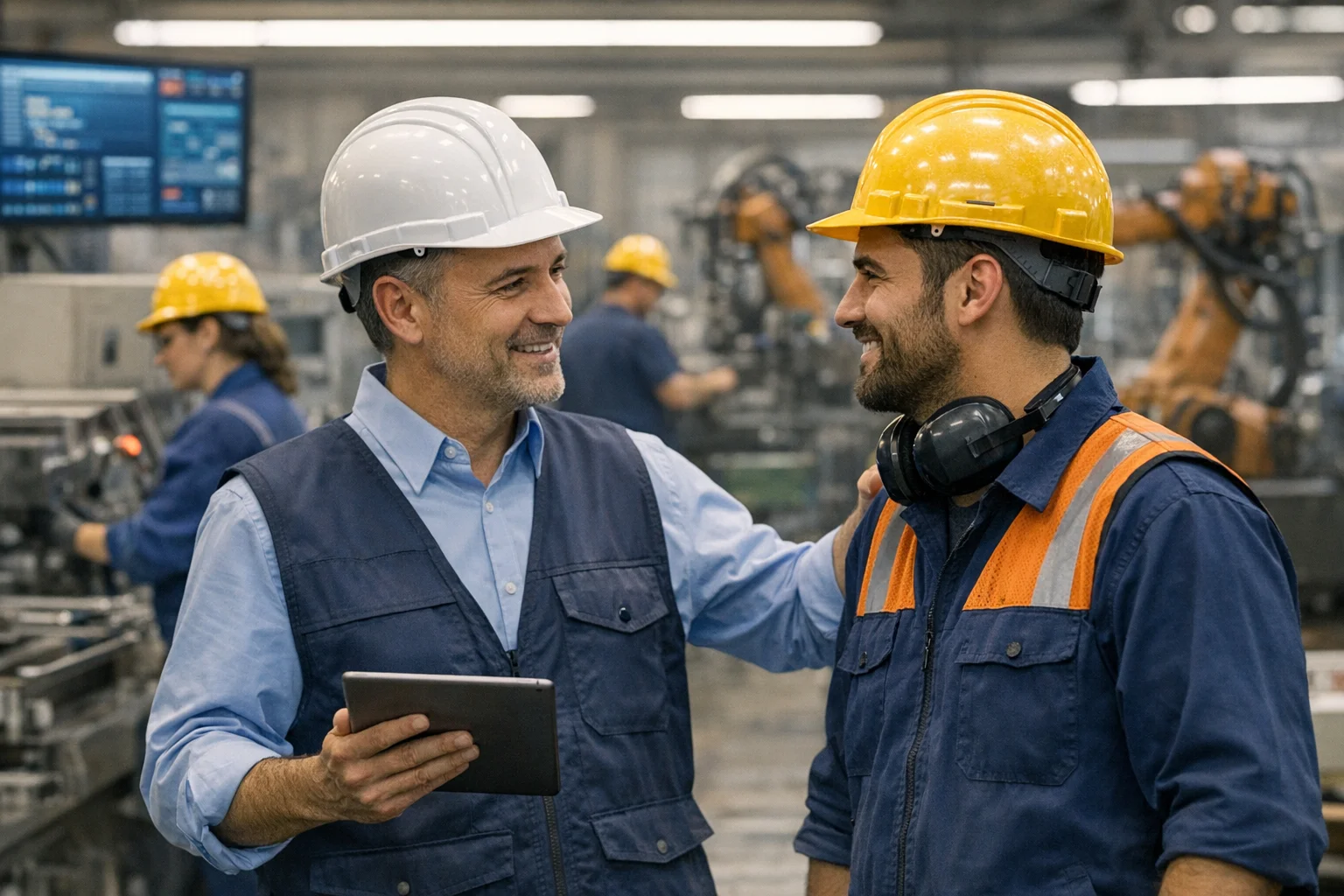
It is incredibly difficult to talk about headcount targets and operational expenditure without losing sight of the people who actually make the gears turn. In my years as an HR specialist, I have seen a recurring pattern that concerns me. The moment we start treating the production line as a row on a spreadsheet is the moment we begin to lose the heart of the factory.
True workforce stewardship involves more than just meeting a 4% reduction target or fulfilling a quarterly budget report. It focuses on valuing each person's contribution while dealing with the challenges of a changing global economy. Right now, labor costs are increasing due to inflation and economic growth. In many manufacturing settings, these costs make up between 50% and 60% of yearly expenses. It's easy to see why leaders feel pressured to make cuts, but we should consider if there is a more humane way to stay competitive.
The Human Reality of Manufacturing Management
Let us be real for a minute. When we talk about workforce management on the manufacturing floor, the elephant in the room is often downsizing. This strategy emerged in the 1980s as a way to boost competitiveness, and it has since evolved into a radical global management approach.
Downsizing is a heavy word. It conjures up images of deep anxiety, empty workstations, and a palpable sense of fear among those who remain. For decades, personnel reduction has been used as a blunt instrument. While it aims to enhance efficiency, the methods used are often reactive. Whether it is eliminating positions or reducing hierarchical levels, the goal is usually a quick fix for a financial downturn.
But is this the best path for long-term success? As someone who works at the intersection of human potential and operational efficiency, I believe workforce stewardship is about creating a lasting and strong environment for your team. It involves more than just managing a smaller headcount. It is about protecting the people who provide the skills and effort that drive your success.
The Human Cost of the Cut-First Mentality
In the world of manufacturing, time is quite literally money. Every minute of downtime or every error in shift coverage affects the bottom line. But when we rely solely on involuntary push strategies like direct layoffs, we create a new set of human problems that can haunt a company for years.
The first issue is the weight of uncertainty. The survivors of a layoff are often left with a heavy emotional burden. They spend their shifts wondering if they are next on the list. This leads to a state of disengagement and a quiet withdrawal of the initiative that drives innovation. When people are afraid of their jobs, they do not suggest improvements or look for ways to save the company money. They simply try to stay invisible.
Then there is the loss of wisdom. When an experienced operator leaves, decades of knowledge walk out the door with them. This is information that no training manual can completely replace. You lose the person who knows exactly how the machine sounds when it is about to fail and the technician who understands the subtle details of a complex blending process.
Finally, you end up with a fractured culture. Constant churn makes it impossible to build the kind of cohesive and trusting teams that are required for a safe and productive factory floor. In an industry where safety depends on looking out for one another, fear is a dangerous distraction.
Moving Toward Strategic Workforce Planning
What if we shifted our perspective entirely? Instead of seeing the workforce as a cost to be minimized, let us see our people as the primary driver of our productivity. Effective stewardship means taking a holistic approach that aligns human talent with long term goals. This is where strategic workforce planning comes into play.
Strategic workforce planning is a continuous conversation. It is about looking 3 to 5 years ahead and asking deep questions. What skills will our team need to thrive in a world of AI driven HRMS platforms? How will our production lines change as we adopt more automation? By identifying these gaps early, we can focus on training and internal mobility.
This lets us focus on pull strategies. These are voluntary methods, such as natural attrition, early retirement programs, or buyout packages. These choices respect the individual much more than a sudden, involuntary layoff. They allow people to have control over their own futures. This keeps the dignity of the departing worker intact and maintains the morale of those who remain.
Redesigning the Work to Support the Worker
Before we ever look at reducing headcount, we must look at the work itself. Downsizing inevitably impacts work processes. When a workforce is reduced, the remaining employees often have to handle the same workload, which can lead to rapid burnout and safety incidents.
The goal should be to make processes so efficient that the work becomes easier to manage. This involves work redesign strategies. We should be looking at eliminating unnecessary hierarchical levels and merging departments to improve communication. We should be asking if we can consolidate units or redesign tasks to remove friction.
If we can reduce the number of workers per unit of output through better design rather than just cutting staff, we achieve true efficiency. This is the difference between an organization that is struggling to survive and one that is thriving through lean manufacturing principles.
Using Technology as a Tool for Empathy
In a modern factory, a unified platform for automated rostering is not just about technical efficiency. It is actually a tool for fairness and empathy. Manual tracking in Excel or on paper often leads to wage leakage or errors in overtime calculations. These errors might seem small to a corporation, but to a worker counting on that overtime pay to cover their mortgage, they are significant.
By using biometric sync and automated systems, we ensure that every second a worker spends on the factory floor is captured and compensated with 100% accuracy. This builds trust. When an employee knows their pay will be correct every single time, they feel valued and respected.
A digital factory HR ecosystem can reduce roster administration time by as much as 95%. Think about what that means for a plant manager. Instead of being buried in spreadsheets for six hours a week, that manager can be out on the floor. They can spend that time coaching their team, identifying safety risks, and supporting the people who need them most. Technology should exist to serve the human element, not to replace it.
The Impact on Financial Performance
It is important to acknowledge that workforce stewardship is also good for business. While the human element is our priority, the economic results are undeniable. Studies have shown that workforce reduction can positively influence performance by reducing costs and increasing productivity, but only when handled strategically.
By adopting a cost leadership approach through a leaner and more efficient structure, firms can gain a competitive edge. This is often measured through PIMS value, which looks at the profit impact of market strategy. When we optimize our workforce through stewardship rather than just cutting, we improve our return on equity and our net income per employee.
In a recent study of a manufacturing company, it was noted that while salaries and wages increased due to inflation, the company was able to slash overtime hours by 50% in a single year through better monitoring and internal dashboards. This is a perfect example of achieving financial goals through better management rather than through layoffs.
Managing the Contingent Workforce with Care
Most modern factories rely on a mix of permanent and contract labor. Managing this contingent workforce is often a messy and manual process that puts the company at risk. From an HR perspective, stewardship extends to these workers as well.
Using a unified platform to manage contractor KYC and site specific attendance ensures that your labor vendors are compliant with statutory requirements. This protects the company from co-employment risks while ensuring that every person on your site, whether permanent or contract, is accounted for and safe. Lean operations are built on this kind of transparency.
We Are in This Together
As HR professionals, we have a unique responsibility to lead with empathy. We must be the voice in the room that reminds leadership that our colleagues are not mere units of output or expenses to be managed. They are parents, they are neighbors, and they are the absolute backbone of our industry.
Successful workforce stewardship means being proactive and data driven, but never at the expense of our humanity. It is about building a system that can handle the rigorous demands of a three shift rotation while treating every person with the dignity they deserve.
It involves forecasting business activity, analyzing skill gaps, and creating internal mobility networks. It means investing in advanced technologies and strategic partnerships that allow us to be cost efficient and high performing without losing our soul.
Let us move beyond the old, reactive cut-first mindset that has dominated the industry for too long. Let us build factories that are efficient, competitive, and above all, human-centric. When we take care of the people, the people will take care of the business.
This is the future of manufacturing. It is a future where automation and empathy work hand in hand to create a workplace that is both profitable and proud.
