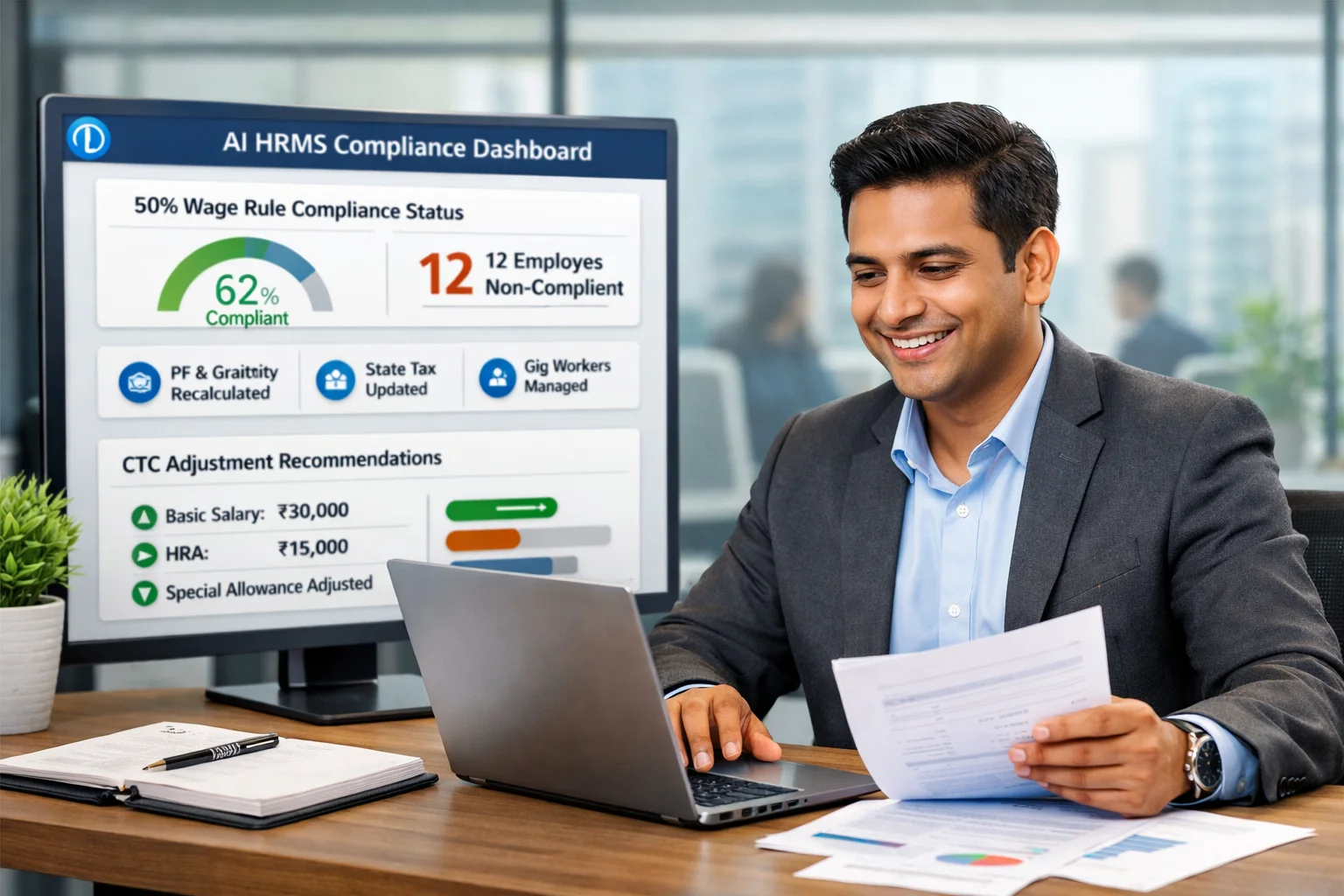
The Indian business world is about to see its biggest HR shift in decades. The four new Labor Codes are consolidating 29 old laws into one streamlined system. This isn't just a minor update. It is a complete rethink of how companies pay and protect their teams. From the way "Wages" are defined to how we treat gig workers, these changes are complex. For many companies, especially those still using manual spreadsheets or old software, this transition feels like a big risk. This is where an AI-driven HRMS comes in. It serves as a digital GPS to help you navigate these new rules without the stress.
The Big Challenge: That 50% Wage Rule
The most talked-about change is the new definition of "Wages." Under the Code on Wages, at least 50% of an employee’s total Cost to Company (CTC) must now be counted as "wages." This is the base amount used to calculate benefits like Provident Fund (PF) and Gratuity.
For a long time, many Indian companies kept the basic salary low and used various allowances to complete the rest of the package. Under the new rules, that approach won't work anymore. If your wage components are less than 50% of the CTC, the law requires you to reclassify the extra allowances to reach that 50% mark.
This one rule causes a major ripple effect:
Higher Costs for Employers: A bigger wage base means the company pays more toward PF and Gratuity.
Changes in Take-Home Pay: Even if the total CTC stays the same, employees might see a smaller monthly paycheck because more is being deducted for their future savings.
Why Old Systems Struggle
Trying to fix every salary structure in your company manually is a recipe for errors. The new codes need a system that understands the logic behind the numbers. A basic payroll tool might calculate 12% for PF, but it won't know how to automatically redistribute allowances if you fall below that 50% threshold.
How AI HRMS Puts Compliance on Autopilot
An AI HRMS turns this complicated transition into a simple, automated process. Here is how it helps:
1. Testing and Fixing Salary Structures
The best part of an AI HRMS is its ability to simulate things. Before the new laws even kick in, you can run "what-if" scenarios for your whole team. The system will look at everyone’s salary and flag exactly who is no longer compliant. It doesn't just identify the problems, it also suggests solutions. The AI can recommend a new CTC breakdown that follows the 50% rule while aiming to keep the employee's take-home pay as high as possible by adjusting tax-friendly options like HRA.
2. Dynamic Math for Every State
Indian labor laws aren't just about central rules. You also have to deal with state-specific things like Professional Tax. An AI HRMS stays updated with all these changes. When you process payroll, the engine automatically recalculates PF and Gratuity based on the new definitions. This takes the guesswork out of the process and protects your company from legal trouble.
3. Including the Gig Economy
The 2026 codes finally offer social security benefits to gig workers and freelancers. Managing people who work irregular hours or on short projects is hard to do by hand. An AI HRMS is built for this. It can track flexible hours, calculate the right contributions, and send that data directly to government portals. It ensures everyone is covered, no matter how they work.
4. Staying Ready for Audits
The new laws come with stricter inspections and higher fines. An AI HRMS keeps a digital trail of every single change and filing. You won't have to scramble to find paperwork if a labor department inspector shows up. The system keeps you audit-ready every single day.
From Stress to Strategy
The new Indian Labor Codes are a massive shift, but they don't have to be a headache. For companies that want to grow, upgrading to an AI HRMS optimized for India is about more than just following rules. It is an opportunity to be more transparent with employees, cut down on manual work, and build a business that is ready for the future.
